Last updated: January 2026
One of the most common questions homeowners ask is whether they should install CCTV or an alarm system first. In 2026, this question is still relevant — but the answer is often misunderstood.
This comparison forms part of a broader look at how homeowners should prioritise security upgrades for homes in Pretoria when planning a modern, reliable setup.
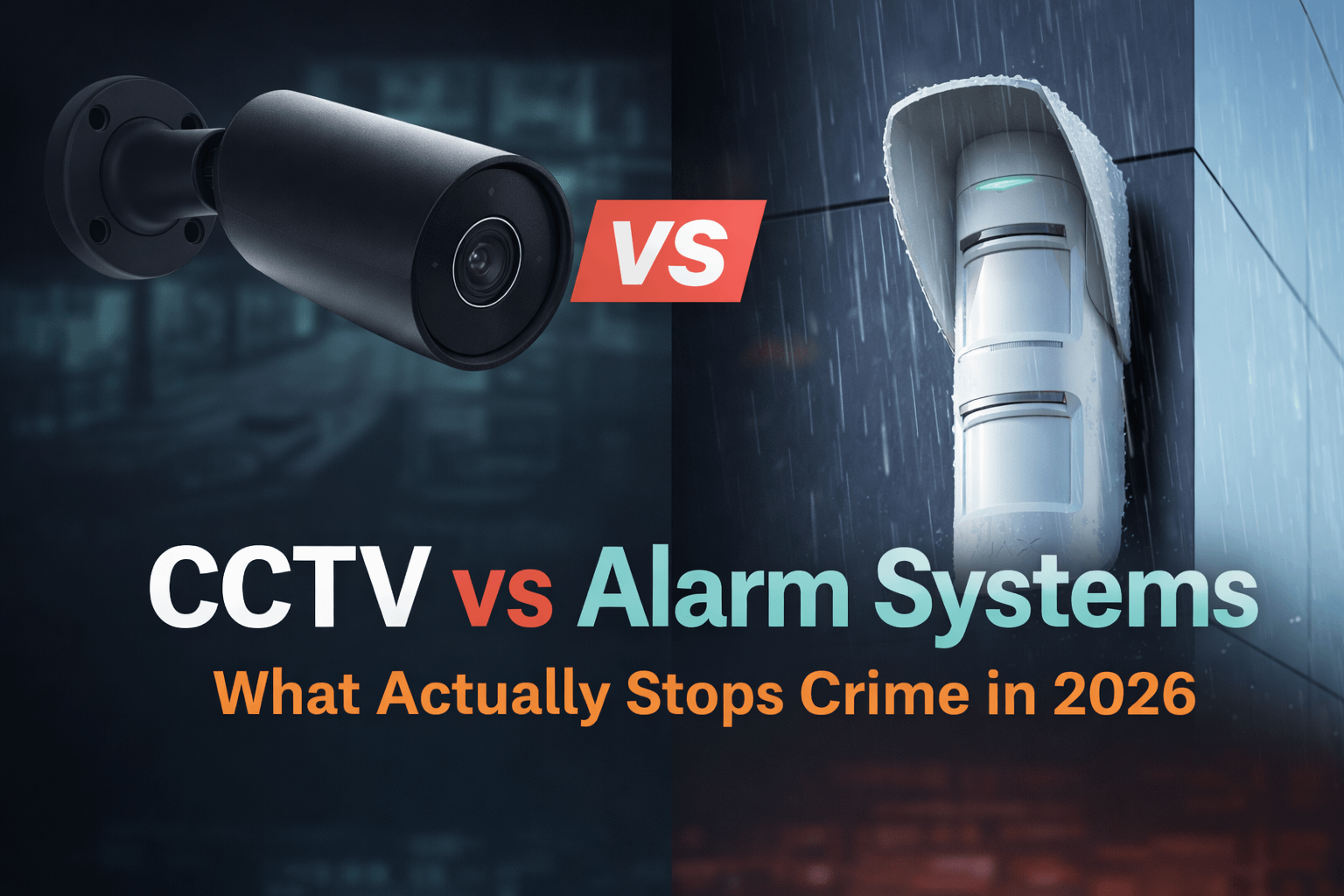
This article breaks down the real differences between CCTV vs alarm systems in 2026, explaining what each system actually does, where each one falls short, and how they work best together.
What CCTV Systems Are Designed to Do
CCTV systems provide visibility. They allow homeowners to see what is happening on their property, review footage after an incident, and share evidence if needed. When installed correctly, visible cameras can also act as a deterrent.
However, CCTV systems are largely reactive. They record events as they happen, but they do not actively prevent someone from entering a property. If footage is reviewed after the fact, the damage may already be done.
Reliability is also critical. In South Africa, CCTV systems must cope with power interruptions, voltage fluctuations, and network instability. Systems designed around price rather than stability often fail when they are needed most.
Power instability is a major reason budget camera systems disappoint. We explain the most common failure points in detail in Why Cheap CCTV Fails During Load Shedding (2026) .
What Alarm Systems Do Better Than CCTV
Alarm systems are designed for early detection and immediate response. Instead of recording events, they detect intrusion and alert homeowners within seconds.
Modern wireless alarm systems monitor their own health continuously. They report battery levels, signal strength, and device status automatically, reducing the risk of silent failure.
The strength of an alarm system is speed. The earlier a threat is detected, the greater the chance of preventing loss or damage altogether.
CCTV vs Alarm Systems in 2026: Which One Comes First?
For most homes, an alarm system should form the foundation of security. It actively protects the property by detecting intrusion and triggering alerts immediately.
CCTV works best as a second layer. It provides verification, visibility, and long-term deterrence once intrusion detection is already in place.
Installing CCTV without intrusion detection often leads to frustration. Installing an alarm without visibility can leave unanswered questions. A layered approach avoids both problems.
Why Layered Security Matters More Than Ever
In 2026, security systems must function under less-than-ideal conditions. Load shedding, remote monitoring, and smarter criminals mean that relying on a single layer of protection creates unnecessary risk.
A well-designed setup uses alarms to detect and respond, CCTV to verify and record, and access control to reduce exposure at entry points. Each layer supports the others, rather than trying to do everything alone.
Final Thought
The real question is not whether CCTV or alarm systems are better. The real question is whether your security setup is designed to work as a system.
In 2026, effective security is calm, predictable, and quietly reliable — not loud, complicated, or reactive.